Let’s cut through the noise. You’ve probably seen ads promising that robot trading will make you rich while you sleep. Meanwhile, manual traders swear they have the edge because they “feel” the market. So which one actually works?
Here’s a fact that might shock you: 95% of traders quit within five years. And here’s another one: 90% of consistently profitable traders use bots. But before you rush to buy a forex robot, there’s something you need to understand.
Quick Comparison: Robot Trading vs Manual at a Glance
To help you make a faster decision, here’s a side-by-side comparison of robot trading vs manual trading across the factors that matter most:
| Factor | Robot Trading | Manual Trading |
|---|---|---|
| Execution Speed | Milliseconds – captures fleeting opportunities | 10-15 seconds minimum – may miss quick moves |
| Time Commitment | Low after setup – monitors markets 24/7 automatically | High – requires 3-5 hours daily for serious trading |
| Emotional Control | Perfect – no fear, greed, or revenge trading | Challenging – emotions often override logic |
| Market Adaptability | Poor – follows fixed rules, struggles with unexpected events | Excellent – adjusts strategy in real-time based on conditions |
| Initial Cost | Higher – software, VPS, setup ($200-$1000+) | Lower – just platform access ($0-$100) |
| Technical Skills Needed | High – requires coding, VPS management, integration | Moderate – chart analysis and platform navigation |
| Consistency | Perfect – executes identically every time | Variable – depends on trader’s state and discipline |
| Multi-Market Coverage | Excellent – monitors dozens of markets simultaneously | Limited – realistically 2-3 charts maximum |
| Strategy Testing | Backtesting available but often misleading | Forward testing only – riskier but more realistic |
| Control & Flexibility | Limited – must reprogram to change strategy | Complete – adjust decisions instantly |
| Learning Curve | Steep initially, then autopilot mode | Continuous learning required throughout |
| Best For | Part-time traders, systematic strategies, high-frequency trading | Full-time traders, discretionary strategies, adaptable approaches |
| Biggest Risk | Over-optimization and technical failures | Emotional decisions and inconsistent execution |
| Success Rate Reality | Most retail bots fail within months – curve-fitted results don’t hold | 95% of manual traders quit within 5 years – discipline is rare |
As this comparison shows, neither method is universally superior. Robot trading wins on speed and consistency. Manual trading wins on adaptability and control. The professional approach? Use both strategically where each method’s strengths matter most.
What Is Robot Trading vs Manual Trading Really About?
Robot trading uses pre-programmed algorithms to execute trades automatically. The system monitors markets 24/7, analyzes data in milliseconds, and places orders when conditions match your rules. Think of it as having an employee who never sleeps, never feels scared, and follows your instructions exactly.
Manual trading puts you in the driver’s seat for every decision. You analyze charts, read news, interpret market sentiment, and click the buy or sell button yourself. It’s hands-on, personal, and gives you complete control over every move.
The real question isn’t which method is “better.” It’s which one fits your situation, your skills, and your honest assessment of your emotional discipline.
The Holy Grail Myth: Why You Can’t Buy Success
Here’s the uncomfortable truth about robot trading vs manual approaches. If a truly profitable, fully automated system existed, everyone would use it. Markets would break. The system would stop working because everyone’s doing the same thing.
Professional trading funds pay $4,000+ monthly salaries to traders who can generate just 1% profit per month with less than 5% maximum drawdown. Let that sink in. One percent monthly is considered professional-level performance. Yet online, you’ll find bots promising 10%, 20%, or even 50% monthly returns.
The math doesn’t lie. Those promises are either scams or unsustainable results from curve-fitted backtests that fall apart in live markets. Before you invest in any forex EA, ask yourself: if it’s so profitable, why is the creator selling it for $99 instead of trading it themselves?

Robot Trading: The Real Advantages
Automated systems excel in specific areas where humans struggle. Speed ranks at the top. A gold forex robot executes trades in milliseconds, capturing opportunities that disappear before you can blink. In fast-moving markets, this advantage matters enormously.
Consistency separates good traders from average ones. Robots follow rules without deviation. No “just this once” exceptions. No revenge trading after a loss. No greed-driven position sizing. The algorithm applies the same logic whether the account is up 20% or down 10%.
Market coverage extends beyond human limitations. While you sleep, your automated system watches Asian, European, and American markets. It monitors gold, oil, currencies, and indices simultaneously. A manual trader might handle two or three charts maximum. A robot handles dozens without breaking a sweat.
Emotional neutrality represents perhaps the biggest advantage. Fear and greed destroy more trading accounts than bad strategies. Robots don’t panic when markets crash. They don’t get overconfident after winning streaks. They execute the plan, period.
The Dark Side of Automated Trading
Robot trading vs manual isn’t a simple choice because automated systems have critical weaknesses. The backtesting trap catches most beginners. They see a bot that “made” 500% on historical data and assume future profits are guaranteed. Reality hits hard when that bot loses 30% in the first month of live trading.
Why does this happen? Markets change constantly. A moving average strategy that worked in 2020’s trending market fails miserably in 2024’s choppy conditions. Backtested results show curve-fitted performance on known data. Live trading faces unknown conditions. Past performance truly doesn’t predict future results.
Robots lack adaptability when unexpected events occur. A surprise interest rate decision, a geopolitical crisis, or a flash crash catches automated systems off guard. The algorithm keeps executing its programmed rules while a human trader would recognize something’s wrong and step aside.
Technical complexity creates another barrier. Setting up a gold forex EA requires understanding VPS hosting, platform integration, risk parameters, and ongoing monitoring. One misconfigured setting can turn a profitable strategy into an account-destroying machine.
look deeper into the pros and cons of a Forex ea
Manual Trading: Where Humans Win
Manual traders possess adaptability that no algorithm can match. When market character shifts, experienced traders adjust their approach within minutes. They recognize when volatility changes, when correlations break down, or when price action looks “off.” This intuition develops over years but proves invaluable in irregular conditions.
Pattern recognition represents a human superpower. Our brains evolved to spot patterns in complex environments. A seasoned trader sees supply and demand zones, head and shoulders formations, or divergences that might take thousands of lines of code to program. They connect dots across timeframes, markets, and news events in ways algorithms struggle to replicate.
Discretionary judgment allows manual traders to override rules when circumstances warrant it. Sometimes the “perfect” setup appears but something feels wrong. Maybe news just broke, maybe volume looks suspicious, or maybe the economic calendar shows a high-impact event coming. Humans can say “I’ll skip this one” while robots blindly execute.
The emotional satisfaction of trading attracts many people to manual approaches. There’s something deeply engaging about making real-time decisions with real money on the line. It’s like cooking your own meal versus ordering delivery. Some people genuinely enjoy the process, not just the profits.
Why Manual Trading Destroys Most Accounts
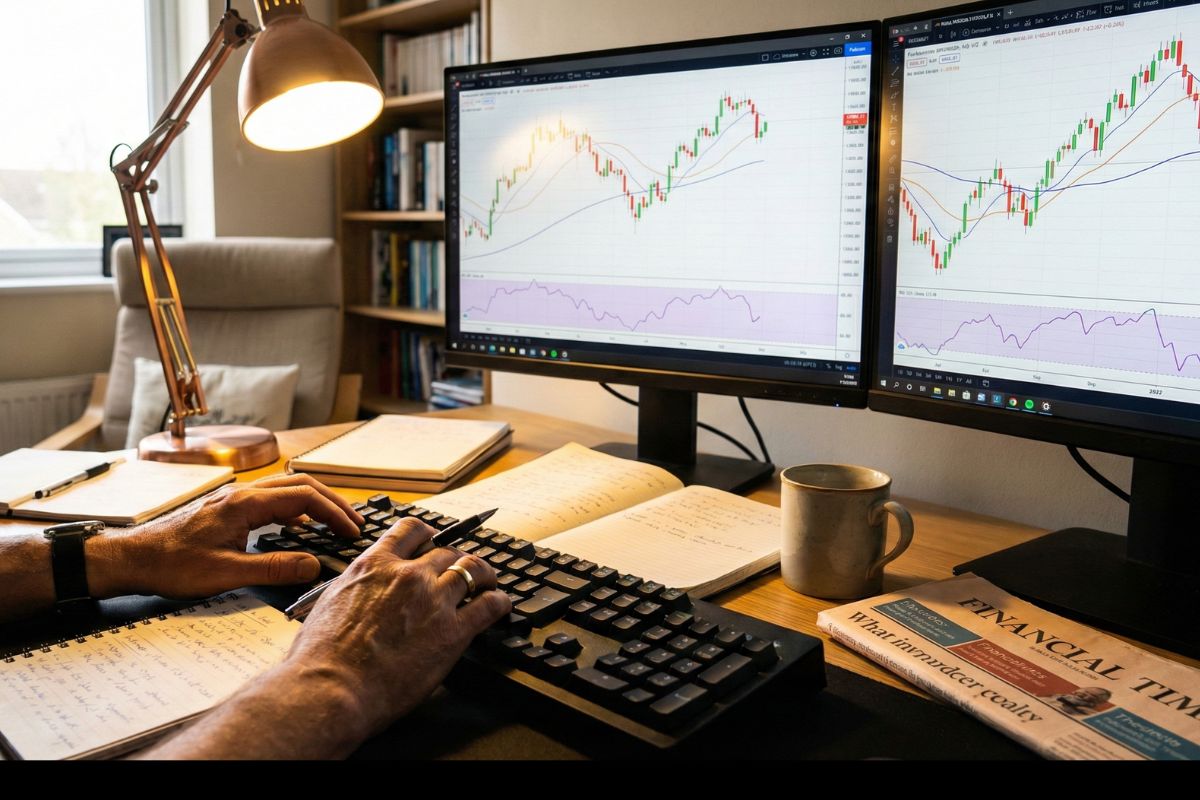
Time commitment kills manual trading dreams faster than anything else. Profitable trading requires hours of chart analysis, news monitoring, economic calendar tracking, and position management. Most people underestimate this dramatically. They think 30 minutes daily will suffice. Reality requires 3-5 hours minimum for serious engagement.
Emotional discipline separates winners from losers, and most traders overestimate their discipline. It’s easy to follow rules on a demo account or when everything’s going well. Try following your stop-loss after five consecutive losses. Try not overtading after a big win. Try staying patient when the market chops sideways for weeks.
Consistency suffers because human performance varies. You might trade brilliantly when well-rested, focused, and emotionally balanced. But what about after a bad night’s sleep, during family stress, or when you’re frustrated from work? Manual trading quality fluctuates with your personal state.
Physical limitations restrict manual trading opportunities. You can’t watch charts 24/7. You’ll miss the perfect setup that forms during your lunch break. The Asian session move happens while you’re sleeping. Manual traders inevitably miss opportunities simply because they’re human and need to live their lives.
The Professional Approach: Semi-Automation
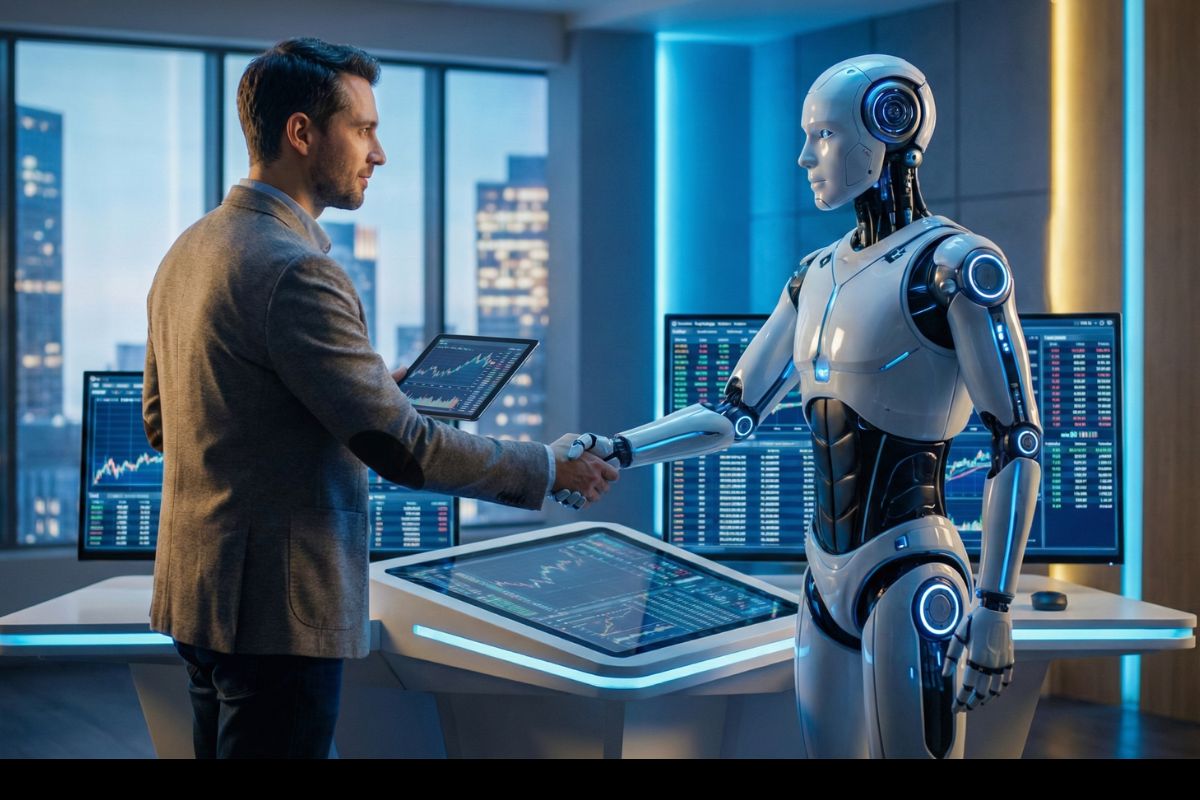
Experienced traders don’t debate robot trading vs manual as an either-or choice. They use both strategically. This hybrid approach combines automation’s efficiency with human judgment’s flexibility.
A professional setup might look like this. The forex robot handles routine execution, monitors multiple markets simultaneously, and manages basic risk parameters. Meanwhile, the trader makes strategic decisions about which markets to trade, adjusts position sizing based on market conditions, and overrides the system when unusual events occur.
Think of it like driving a modern car. Cruise control, lane assist, and automatic braking handle routine tasks. But you still steer, make navigation decisions, and take over when conditions get tricky. The technology amplifies your capabilities without replacing your judgment.
This approach lets you automate what computers do better (speed, consistency, multi-market monitoring) while you focus on what humans do better (strategy adaptation, risk assessment, big-picture analysis). It’s not about choosing between robot trading vs manual. It’s about choosing the right tool for each task.
Which Approach Fits Your Situation?
Your trading style choice depends on honest self-assessment. Consider your time availability first. Full-time job? Kids? Other commitments? Manual trading might not be realistic. Part-time employment with flexible hours? You have options. Retired or independently wealthy? Time is less of a constraint.
Technical comfort level matters enormously for automated trading. Can you troubleshoot VPS issues? Do you understand programming logic? Are you comfortable with APIs and integrations? If technology frustrates you, starting with manual trading makes more sense until you develop those skills.
Capital size influences your decision too. Smaller accounts (under $5,000) benefit more from careful manual trading where you can be selective. Larger accounts can split capital between automated and manual strategies, diversifying your approach. Very large accounts might employ multiple gold forex robots across different strategies and markets.
Risk tolerance and emotional discipline deserve brutal honesty. Do you actually follow your stop-losses? Can you sit through drawdowns without panicking? Do you overtrade when bored? If you answered yes to any of those, automation removes those emotional decisions. But if you’re disciplined and enjoy active engagement, manual trading might suit you better.
Getting Started: A Practical Path Forward
Start with strategy clarity regardless of which path you choose. Can you write down your trading rules in precise detail? If your strategy description includes words like “usually,” “sometimes,” or “when it feels right,” you’re not ready to automate it. Spend time on demo accounts making your rules explicit and measurable.
The three-account system works brilliantly for serious traders. Account one holds long-term positions. Account two is for manual trading where you test new ideas and develop strategies. Account three runs automated systems for strategies you’ve proven and formalized. This separation prevents one approach from contaminating another.
Begin with semi-automation even if you plan to go fully automated eventually. Use alerts instead of automatic execution initially. Let the system identify opportunities but you make the final decision. This teaches you how the algorithm thinks and reveals flaws before they cost serious money.
Platform selection matters more than most beginners realize. Research integration capabilities before committing. MetaTrader 4 and 5 dominate forex automation. TradingView offers excellent charting with expanding automation options. Whatever you choose, ensure it supports both manual and automated approaches so you can evolve your strategy over time.
The Bottom Line on Robot Trading vs Manual
Neither approach guarantees profits. The 95% failure rate applies to both manual and automated traders. Success comes from realistic expectations, proper education, disciplined execution, and continuous adaptation to changing markets.
Robot trading excels at speed, consistency, and removing emotional biases. It fails at adaptability, handling unprecedented events, and providing the engagement some traders crave. Manual trading offers flexibility, discretionary judgment, and deeper market understanding. It struggles with time demands, emotional discipline, and physical limitations.
The smartest traders don’t choose sides. They build systems that leverage both approaches strategically. They automate routine tasks while maintaining human oversight for complex decisions. They master the tools without letting the tools master them.
Your path forward starts with honest self-assessment, education about both approaches, and realistic expectations about profitability timelines. Whether you choose robot trading, manual trading, or a hybrid approach, remember this: the tool doesn’t make the trader. Your edge comes from understanding markets, managing risk, and maintaining discipline over years, not days.
The debate about robot trading vs manual misses the point entirely. The question isn’t which is better. The question is which combination of tools, skills, and approaches creates a sustainable trading system that fits your life, personality, and goals. Answer that question honestly, and you’re already ahead of 95% of traders who never make it past year five.

Work my fulltime job as the developer and writer for Oreshnikbot.com now. Have been working on forex and forex EAs for 10 years.